Instagram Reels Script Writer: Shot-Ready Scripts for 15, 30, 60, and 90-Second Reels
Staring at a blank page before filming is the worst part of making Reels. The Instagram Reels Script Writer is a free AI skill that generates complete, shot-ready scripts for any length — 15, 30, 60, or 90 seconds — from your topic, audience, and goal. Give it what you want viewers to do and it outputs a second-by-second script with spoken copy, on-screen text, visual cues, a caption, and audio recommendations.
Staring at a blank page before filming is the worst part of making Reels.
You know what you want to say. You have the topic, the angle, the thing you know that your audience needs to hear. But putting it into a format that works — a hook that stops the scroll, pacing that holds for 60 seconds, a CTA that doesn't feel tacked on — that's the work that blocks the camera from turning on.
The Instagram Reels Script Writer is a free AI skill that does that work for you. Give it your topic, your target length, and what you want viewers to do — and it outputs a complete, shot-ready script with second-by-second structure, spoken copy, on-screen text callouts, a caption, and three audio suggestions.
The 8 Hook Types and When to Use Each
The first two seconds of a Reel determine whether it gets watched or swiped. The skill is built around 8 hook types, each designed to stop the scroll through a different psychological mechanism. Knowing which hook fits your content is the difference between a strong opening and a vague one.
Question hook: "Why are 90% of creators doing this wrong?"
The mechanism is a combination of an open loop and an authority challenge. The question implies you know something the viewer doesn't, and the specific percentage signals that you have data or real pattern recognition behind the claim — not just an opinion. Use when you can back up the framing with specific knowledge the viewer will find genuinely surprising.
Bold statement hook: "I grew from 0 to 50K in 6 months without posting every day."
A specific credibility claim. The details are what make it work — not "I grew my account" but "0 to 50K" and "without posting every day" in the same sentence. The more specific the claim, the more believable and interesting it is. Use when you have a result that challenges a common assumption about how growth or success works.
Controversy hook: "Hot take: your niche doesn't matter for growth."
Disagreement drives comments, and comments signal engagement to the algorithm. A controversy hook takes a direct position against something the audience believes or has been taught. It works best when your position is genuinely defensible in the video — not manufactured outrage but a real counterargument. Use when you have a contrarian view you can actually back up in the body of the Reel.
Before/after hook: "My account looked like this 3 months ago." [cut to dramatic visual]
Transformation proof. Viewers are primed to want to know what changed and whether they can replicate it. The hook works because it implies the answer exists and the Reel contains it. Use when you have a visible before/after to show — account metrics, a skill improvement, a physical transformation, a quality difference in work.
Secret/reveal hook: "The algorithm change nobody is talking about."
An insider knowledge signal. The hook promises access to information that most people don't have, which immediately raises the perceived value of watching. Use when you have a genuine insight that isn't widely known — not something that's been covered in 500 other Reels that week.
Mistake hook: "Stop doing this if you want to grow."
Prevention motivation. People click to avoid loss more readily than to pursue gain — this is loss aversion applied to content. The hook works when the mistake is specific enough to create recognition ("oh, I might be doing that") without being so specific it excludes most viewers. Use for educational content where you can identify a specific, common mistake with a clear alternative.
Number hook: "3 things I wish I knew before starting my account."
A listicle promise. Numbers create a built-in completion expectation — the viewer knows they're getting three things and can track progress through the Reel. Also signals organization and specificity, which signals expertise. Use for tip-based and educational content. The number should be low enough to complete in the Reel length (3 things in 60 seconds works; 10 things in 60 seconds doesn't).
Story hook: "I almost quit last month. Here's what happened."
A narrative open loop. The hook creates a story the viewer wants to follow through to resolution. The key is that the situation should be relatable (most creators have had a moment of wanting to quit) and the "here's what happened" structure promises resolution without revealing it. Use for personal story content, turning point moments, and any content where the journey matters as much as the conclusion.
Second-by-Second Script Structure
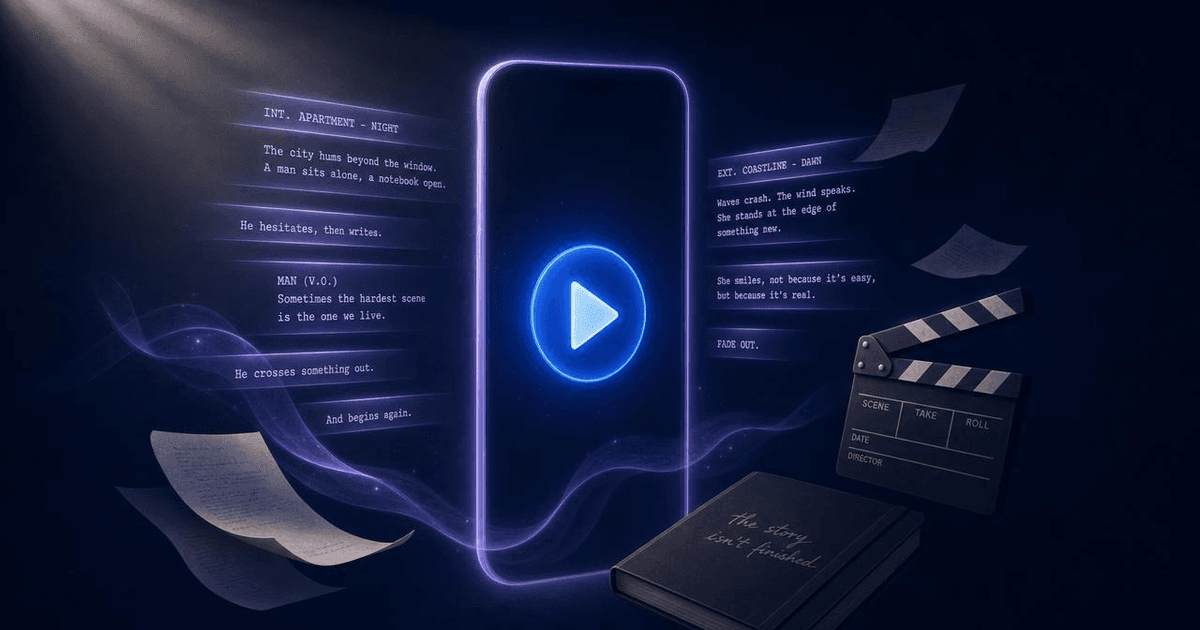
The most important thing that separates the skill's output from a vague script is the second-by-second format. Every script element is timestamped so the creator knows exactly what to say, show, and display at every moment while filming.
The script format has four columns per timestamp:
- Timestamp — the second marker (00:00–00:03, 00:03–00:08, etc.)
- Spoken copy — the exact words to say. Not a rough outline — the actual sentence
- On-screen text — what appears as a caption or text overlay at this moment (often the key phrase from the spoken copy, for accessibility and scroll-stop reinforcement)
- Visual cue/action — what the camera should see: face close-up, product in frame, cut to B-roll, gesture, text-only slide
This level of precision is what makes the difference between walking into a filming session with a plan and walking in with a vague idea. You don't have to improvise structure on camera — you're reading and performing a structured sequence.
Format-Specific Pacing
A 15-second Reel is not a shorter version of a 60-second Reel. Each length has its own structure, and the skill generates scripts calibrated to each.
15-second Reels: hook only + single CTA. There's no room for explanation. The entire 15 seconds is the hook delivered with conviction and a clean CTA. This format works for bold statements, controversial takes, and transformation reveals — content where the hook IS the content. It doesn't work for teaching or storytelling.
30-second Reels: hook + 2–3 beats + CTA. Each beat is one idea, one sentence, one visual moment. The pacing is fast — no pausing for setup, no recapping what was just said. This is the most versatile Reels length because it's long enough to deliver a complete thought but short enough to hold attention without a strong structural backbone.
60-second Reels: hook + problem framing + solution/insight + CTA. The full four-part structure. The problem framing is what transforms a tip from a disconnected fact into something that lands — the viewer needs to recognize the problem before the solution feels valuable. This length allows for one developed idea delivered well, not two ideas rushed.
90-second Reels: hook + story/context + value + takeaway + CTA. The five-part narrative arc. The story or context section is what justifies the extra length — if you're at 90 seconds without a story or meaningful context that earns the viewer's patience, you have a 60-second Reel with 30 seconds of filler. This format works for personal story content, case studies, and comprehensive how-to content with a narrative through-line.
The 4 CTA Types and When Each Works
The CTA at the end of a Reel isn't one-size-fits-all. The wrong CTA for the content type leaves engagement and follows on the table.
Follow works when the content itself is authority-establishing. If the viewer just watched you demonstrate expertise they didn't expect — a counterintuitive insight delivered confidently, a skill demonstration they find impressive, a result they want to understand — "follow for more" lands because the viewer has a concrete reason to want more. It doesn't work at the end of a tip video where the value has been fully delivered and the viewer has no reason to expect more of the same specific value.
Link in bio works when there's a genuinely useful resource that extends the Reel's content. The framing matters: "the full breakdown is linked in my bio" works better than "check my bio for more info" because it names what's there. Use when the Reel is a preview of something more comprehensive — a full tutorial, a free resource, a product.
Comment works when there's a genuine question worth answering. "Comment your niche below and I'll tell you what content to make" works because there's a real exchange: the viewer gives you their niche, you give them a specific answer. The comment prompt needs to ask for something the creator can actually respond to. "What did you think?" is too vague. "What's the biggest thing stopping you from posting consistently?" is specific enough to generate real answers.
Save works when the content is reference material the viewer will want to return to. A list of resources, a checklist, a framework they'll need to apply later — these are save-worthy. Save rates signal to the algorithm that the content is high-value, which can extend distribution significantly. Use specifically for reference content, not for story or opinion content where saving makes less sense.
Caption and Audio Suggestions
Caption: the script output includes a full caption built on the same logic as the spoken copy but serving a different function. Instagram captions extend the content for viewers who stop to read, contribute to SEO through keyword presence, and give the creator space to add context or personality that didn't fit in the 60-second video. The skill generates captions in the voice of the creator's niche with a clear hook in the first line (Instagram truncates captions after 2–3 lines before "more"), expanded context in the middle, and a CTA that matches the end-of-video CTA.
Hashtag strategy: the caption includes hashtag recommendations organized by function — niche hashtags for discovery (specific enough to put you in front of an already-interested audience), category hashtags for broader reach (the general topic area), and format hashtags when relevant (reels, tutorial, etc.). The skill recommends avoiding the largest generic hashtags (#instagood, #love) because the competition makes them functionally useless for discovery.
Audio suggestions: three audio recommendations are included with every script. One trending audio option currently performing well in the creator's niche (the skill identifies this based on the topic and niche you provide). One original audio recommendation by mood — if the content is high-energy and motivating, the recommendation will specify the tempo and genre of music that fits. One silent/voiceover-only recommendation for content where music would compete with the spoken copy.
How to Use It
The Instagram Reels Script Writer is a free installable Claude skill in the SKILL.md format.
Install in 30 seconds:
- Download the skill — free, no payment required
- Open Claude.ai → Projects → create a project called "Reels"
- Click Add content → paste the SKILL.md file
- The skill is active for every conversation in that project
For ChatGPT users: paste the skill content into Custom Instructions or a Custom GPT system prompt.
Starting prompt examples:
Generate a complete 60-second script:
"I want to make a 60-second Reel about [topic]. My niche is [niche], my audience is [audience], and I want them to [follow/save/comment/go to link in bio]. Write the full shot-ready script."
Hook selection:
"I'm making a Reel about [topic] but I'm not sure which hook type to use. What are the 2–3 strongest hook options for this topic and why?"
Batch scripting:
"I need 3 Reels scripts for this week: one about [topic 1], one about [topic 2], one about [topic 3]. All 30 seconds, all with a follow CTA. My niche is [niche]."
Pricing and Where to Get It
The Instagram Reels Script Writer is free. Works in Claude and ChatGPT — install once, use before every filming session.
→ Get the Instagram Reels Script Writer
Pair It With
- Content Repurposing Planner — identifies the moments in your YouTube video or podcast worth turning into Reels, then use the Script Writer to build the structured script from those moments.
- Viral Hook Generator — when the hook is the hardest part and you need more variants to choose from, this skill generates 5–8 hook options per video topic.
- YouTube Shorts Script Engine — the short-form equivalent for the YouTube platform. Same script precision, different platform context and algorithm logic.
Get More Skills Like This
The Instagram Reels Script Writer is part of the Content Machine — a curated set of 28 AI skills for high-output creators who need to produce more without burning out. If you're building a multi-platform presence and want every format covered, the bundle saves you 85% vs buying each skill individually.
A script you can film confidently is better than a perfect script you stare at for 20 minutes and still improvise around. The Instagram Reels Script Writer gets you to camera with a complete plan — and everything after that is performance, not planning.
Once the script is solid, the next lever is making sure it's actually built to spread — see How to Make Viral Short-Form Content with AI for the hook formulas and trend-jacking systems top creators use.
About the author
Content, CreatorSkills
The CreatorSkills team publishes practical guides on AI workflows for content creators.
About CreatorSkills