How to Grow on Twitch in 2026: AI Tactics for New Streamers
You don't need expensive gear or 12-hour marathons to grow on Twitch. Here's a concrete plan for new streamers to find their first 100 loyal viewers and turn them into a real community.
You hit "Go Live" for the first time. Zero viewers. You play for two hours, crack some jokes into the void, and end the stream feeling like you wasted your evening.
Most new Twitch streamers quit within the first month. Not because they're bad at streaming, because nobody told them that growing on Twitch in 2026 has almost nothing to do with what happens during your stream.
Here's what actually works when you're starting from zero.
Stop trying to be discovered on Twitch
This is the hardest truth for new streamers: Twitch is terrible at discovery. When someone browses a category like Valorant or Just Chatting, they see the biggest channels first. A channel with 0-3 viewers is buried under thousands of others.
Waiting for Twitch to send you viewers is like opening a restaurant in a basement with no sign. The food might be incredible, but nobody will find you.
Your audience has to come from somewhere else first. That means:
- Short-form content on TikTok, YouTube Shorts, and Instagram Reels: clip your best moments and post them daily
- Community participation in Discord servers, Reddit threads, and other streamers' chats (be genuine, not spammy)
- YouTube VODs or highlights that rank in search and bring viewers to your Twitch over time
The streamers growing fastest in 2026 are the ones who treat Twitch as the destination and every other platform as the billboard.
Pick a niche smaller than you think
"Variety streamer" is not a strategy when you're at zero. Neither is streaming whatever the top game is this week. You'll be competing against thousands of established channels in oversaturated categories.
Instead, go narrow. Some examples:
- Instead of "FPS games" → stream one specific game's ranked climb and document your improvement
- Instead of "Just Chatting" → build a show format around a specific topic (cooking on a budget, learning Japanese, reviewing indie music)
- Instead of "retro games" → do blind playthroughs of a specific console era and react genuinely
The goal is to become the person for a specific thing, not a person streaming everything. When someone searches for your niche, you want to be the obvious answer.
You can always expand later once you have a core audience. But starting broad means competing with everyone.
Your first 100 viewers matter more than your first 1,000
New streamers obsess over follower count. But 500 followers who never show up to a stream are worth less than 30 people who watch every time you go live.
Focus on concurrent viewers, not followers. Here's how to build that core group:
Remember names. When someone chats, use their name. When they come back, acknowledge it. "Hey, welcome back!" is the most powerful sentence on Twitch.
Create a schedule and stick to it. Stream the same days and times each week. Your early viewers need to know when to find you. Consistency beats frequency: three reliable streams a week beats six random ones.
Make your stream interactive. Ask questions. Run polls. Let chat influence your gameplay decisions. People come back to streams where they feel like participants, not spectators.
Follow up off-stream. A simple Discord server where you post when you're going live and chat between streams turns casual viewers into community members. The relationship doesn't stop when you end the stream.
Turn every stream into a week of content
Here's where most new streamers leave massive value on the table. You stream for 3 hours, hit "End Stream," and that content just... disappears into your VOD archive where nobody watches it.
Every stream should produce at least 3-5 pieces of content for other platforms:
- 2-3 short clips (15-60 seconds) for TikTok, Shorts, and Reels: funny moments, clutch plays, hot takes, genuine reactions
- 1 highlight reel (5-10 minutes) for YouTube: the best moments from your stream, edited into a watchable video
- Stream announcements and recaps for Twitter/X and your Discord
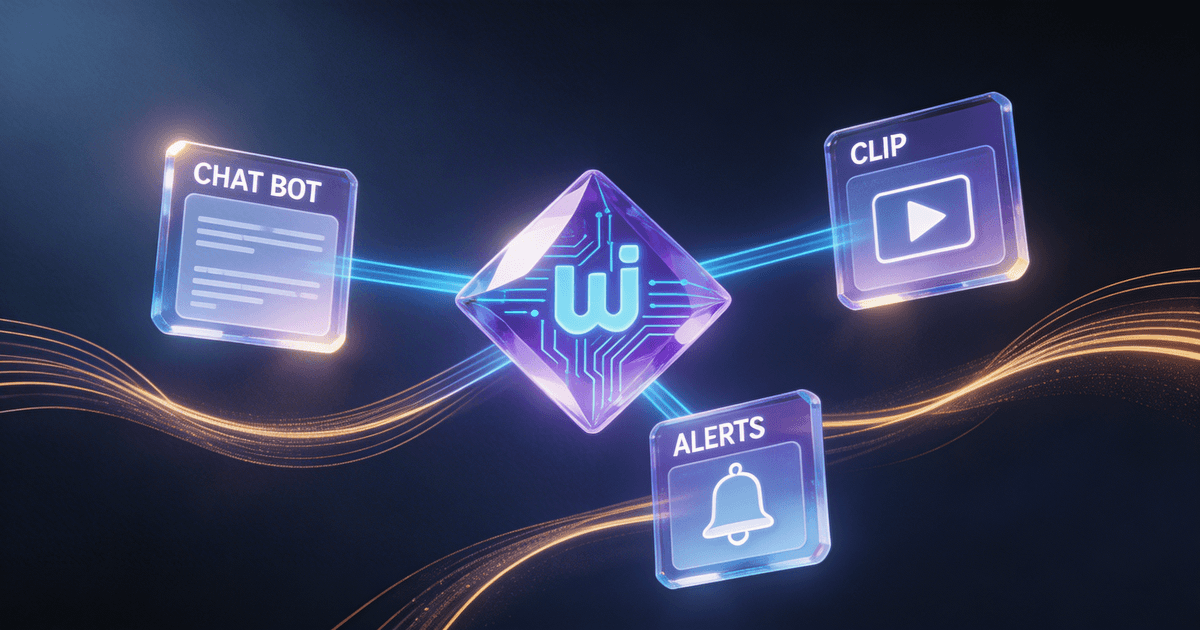
This sounds like a lot of extra work, but it doesn't have to be. AI tools can pull the best moments from your stream transcript, write captions for each platform, and help you plan your clip strategy in a fraction of the time it would take manually. Twitch Clip & Highlight Generator helps you pull the moments worth posting without scrubbing every minute of the VOD by hand.
Pair that with Twitch Stream Manager to map out your stream titles, segment plans, and follow-up posts so your promotion stays consistent even on busy weeks.
CreatorSkills has community engagement skills specifically built for streamers. They help with everything from writing engaging stream titles to creating follow-up content that keeps your community active between broadcasts.
How AI tools are changing Twitch growth in 2026
The streamers gaining ground fastest right now are treating AI as a production team, not just a chatbot. Here's what's working:
Automated clip selection. Scrubbing hours of VODs to find the 60-second moment worth posting is the biggest time drain for most streamers. AI tools can scan your stream transcript, flag the high-energy moments (big reactions, chat explosions, clutch plays), and surface them for you. The Twitch Clip & Highlight Generator does exactly this: paste your transcript and it outputs timestamps with caption copy ready to post.
Platform-native captions in bulk. The same clip needs a different caption for TikTok, YouTube Shorts, and Instagram Reels. Writing three versions by hand is tedious. AI handles this in seconds: same clip, three platform-tuned captions with hooks and hashtags.
Stream planning and titles. Your stream title is your SEO. Good titles pull in Twitch browse viewers and show up in Google searches. Twitch Stream Manager helps you plan your stream segments, write click-worthy titles, and draft go-live announcements for every platform before you even hit "Go Live."
Chat engagement prompts. Quiet chat is deadly for a new streamer. Having a bank of genuine questions and engagement prompts ready, ones that actually spark conversation for your specific niche, turns a dead chat into an active one. Our community engagement skills give you ready-to-use prompts tuned to Twitch streamers.
The streamers ignoring AI in 2026 are spending 3 hours on post-stream work that their competitors finish in 30 minutes. That time difference compounds: one streamer is posting daily clips while the other burns out after week three.
Last updated: June 15, 2026
Get your technical setup right (but don't overthink it)
A $3,000 setup is optional. The essentials:
- Decent audio: viewers will tolerate average video but leave immediately for bad audio. A $50-70 USB mic beats your headset mic every time.
- A clean overlay: less is more. Your webcam, an alert box, and maybe a chat widget. Don't clutter the screen.
- Stable internet: test your upload speed. You need at least 6 Mbps for a solid 720p stream. If you have the bandwidth, go 1080p.
- Scenes that work: a starting-soon screen, your main gaming/content scene, and a BRB screen. That's all you need at first.
If you want a complete walkthrough of the technical side, check out our Twitch stream setup guide: it covers OBS settings, audio optimization, and a go-live checklist.
Spend one afternoon getting your setup dialed in, then stop tweaking and start streaming. The biggest time sink for new streamers is endlessly optimizing settings instead of actually going live.
Network with streamers your size
Forget trying to get raided by a partnered streamer with 5,000 viewers. That's a lottery ticket, not a strategy.
Instead, find 5-10 other streamers around your size (0-50 average viewers) who play similar games or create similar content. Then:
- Watch their streams and be active in chat (genuinely: people can smell fake engagement)
- Host or raid them at the end of your streams
- Collaborate on co-streams, tournaments, or themed events
- Cross-promote each other on social media
This creates a rising-tide-lifts-all-boats effect. Each of you exposes the other to a small but relevant audience. Over time, these networking relationships compound.
Some of the biggest streamers on Twitch today got their start in small networking groups. It's not about clout-chasing. It's about building a peer group that grows together.
Track what's working (and cut what isn't)
After your first month of streaming, look at the data:
- Which streams had the highest average viewers? What was different about those streams? Time of day? Game? Format?
- Which clips performed best on other platforms? What type of content resonates: gameplay, reactions, commentary?
- Where are your new followers coming from? Check your Twitch analytics creator dashboard to see referral sources.
Double down on what's working. If your Tuesday evening streams consistently outperform your Saturday afternoon ones, shift your schedule. If reaction clips get 10x the views of gameplay clips, make more reaction content.
Growth comes from streaming smarter. Use your data to make every hour of streaming more effective than the last.
Your first 90 days: a realistic timeline
Here's what growth actually looks like when you do this right:
Weeks 1-2: Set up your stream, pick your niche, create accounts on TikTok/YouTube/Discord. Start streaming 3x per week on a consistent schedule. Average viewers: 1-3 (and that's fine).
Weeks 3-4: Start posting clips daily on short-form platforms. Join 2-3 communities in your niche. Begin networking with similar-sized streamers. Average viewers: 3-8.
Month 2: Your clips start gaining traction. A few viewers come from TikTok or YouTube. You co-stream with a networking partner. Your Discord has 20-40 members. Average viewers: 8-15.
Month 3: You have a recognizable core community. Regulars show up every stream. Your short-form content drives consistent new viewers. Average viewers: 15-30+.
This is compounding effort, and it takes time. The streamers who push through the first month of low numbers and stay consistent are the ones who build audiences that last.
Start before you're ready
Go live, learn what works, and iterate. The perfect setup, niche, and schedule can come later.
Every successful Twitch streamer started with zero viewers. The difference between them and the people who quit? They kept showing up.
Pick your niche. Set your schedule. Go live this week. Clip your best moments and post them. Repeat.
Your first 100 viewers are waiting. They just haven't found you yet.
Ready to build your streaming workflow? Browse community engagement skills designed for streamers, or check out our Twitch tools guide to see which AI workflows save the most time.
About the author
Founder, CreatorSkills
Caleb Leigh is the founder of CreatorSkills and focuses on buyer-first AI workflows for content creators.
Read the founder profile