Brand Asset Generator System: Build a Cohesive Creator Brand Kit with AI
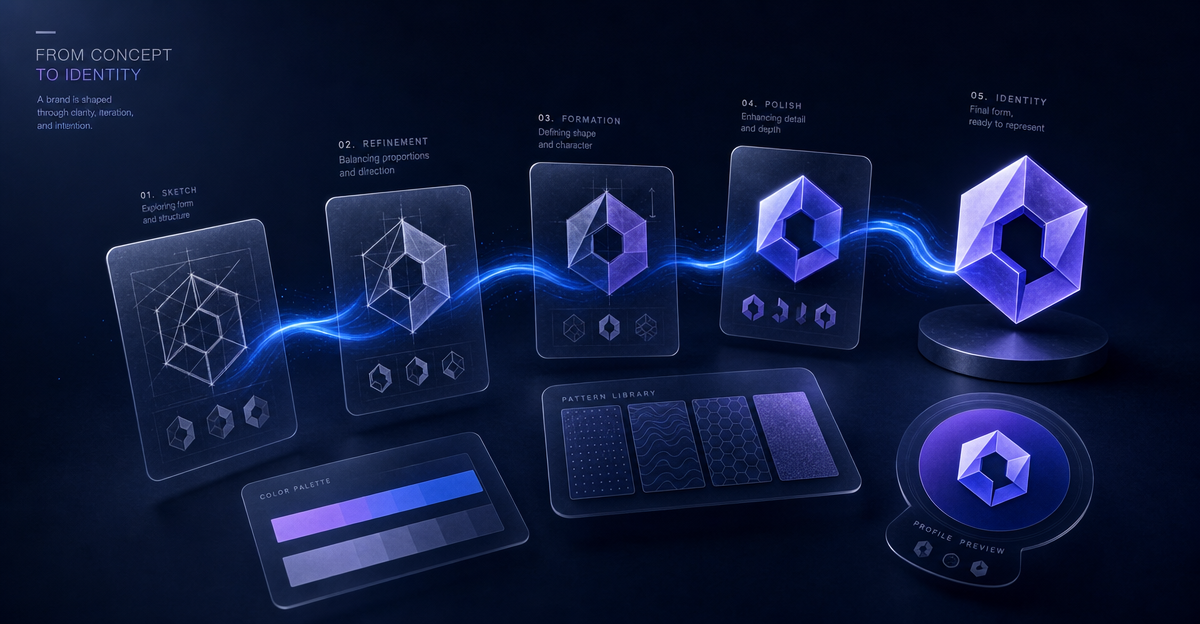
The Brand Asset Generator System is a four-module AI brand workflow for creators who need identity assets that look cohesive across every platform. Module 1 extracts a brand brief and defines visual pillars and anti-style constraints. Module 2 generates three logo concept directions — symbol-first minimal, geometric abstract, editorial emblem — each with model-specific prompt variants for ChatGPT image generation, FLUX, and Midjourney, plus one-variable A/B tests. Module 3 produces seamless pattern, hero texture, and accent motif prompts reusable across YouTube, website, and media kit contexts. Module 4 generates platform-fit profile image and header prompts for YouTube, Instagram, LinkedIn, and podcast. All modules conclude with a brand style guide template that locks in palette, motif usage rules, platform crop rules, and a prompt seed library.
The most visible brand problem for most creators isn't bad taste — it's inconsistency. A YouTube banner that looks like a tech company. A podcast profile that uses different colors than the Instagram account. A logo that doesn't connect visually to any of the other brand assets. Individual pieces might be fine in isolation; together they signal that there's no system.
Hiring a brand designer solves this — but a complete creator brand package at studio rates is $3,000–8,000, and that assumes the brief is clear and the revision cycles are limited. Most early-stage creators don't have that budget or that clarity yet.
The Brand Asset Generator System builds a systematic AI prompt workflow that produces logo concepts, patterns, textures, profile images, and headers that actually look like they belong to the same brand — across ChatGPT image generation, FLUX, and Midjourney.
Module 1: Brand Brief Extraction
The reason AI-generated brand assets often look random is that most creators skip the brief phase and go straight to prompts. Without a clear brief, every prompt is a fresh guess. The system starts with a structured extraction that makes all subsequent prompts coherent.
The brief collects:
- Brand name and niche — not just the channel name, but the positioning: what the brand actually does and for whom
- Audience profile and desired perception — how the creator wants to be perceived by the audience they're trying to attract
- Creator personality traits — three to five adjectives that describe the voice and presence behind the brand
- Platform scope — YouTube, Instagram, LinkedIn, podcast, website, or some combination; each platform has different asset requirements
- Color preferences — existing colors to work within or explicit openness to direction
- Model targets — which image generation tools the creator has access to
- Style constraints — what the brand should not look like
The output is a compact brief with three components: a brand essence sentence, three visual pillars (the core qualities that should run through every asset), and three anti-style constraints. The anti-style constraints are as important as the pillars — they prevent the AI from defaulting to generic aesthetics.
If the creator provides minimal context, the system makes explicit assumptions (calm modern editorial, geometric minimal with one accent motif, YouTube/Instagram/LinkedIn/podcast scope) and labels them clearly. The brief can be refined before moving to production, but forward progress doesn't wait for a perfect brief.
Module 2: Logo Concept Prompts
The system generates three logo concept directions, each with a distinct visual strategy:
Concept 1: Symbol-first minimal mark — a single clean icon with maximum white space. Works across all sizes from favicon to channel banner without losing legibility. Best for creators who want a brand that feels considered and restrained.
Concept 2: Geometric abstract mark — a mark built from geometric shapes that creates a distinctive silhouette. Immediately recognizable at small sizes. Best for creators in technical or professional niches where the brand should feel structured.
Concept 3: Editorial emblem mark — a mark that borrows from editorial design traditions — contained, badge-like, with a sense of heritage. Works well for newsletter brands, podcast brands, and creators positioning themselves as authoritative voices.
For each concept, the system produces four deliverables:
Base universal prompt — the core description that holds stable regardless of which tool generates the image. This is the creative brief in prompt form.
ChatGPT image generation variant — clear natural language with explicit composition instructions, including hex codes for color anchors and output constraints (no text, no watermark, no faces when applicable). Structured as subject → style → composition intent → palette → output constraints.
FLUX variant — concise high-signal direction using FLUX's preference for material and texture cues over descriptive language. Structured as dominant subject + geometry → material cues → color anchors → negative directives.
Midjourney variant — keyword clusters plus parameters. Style and mood keywords, framing notes, and a parameter tail (aspect ratio, stylize value, version). The syntax adapts to Midjourney's language without changing the visual intent.
A/B test — one variable changed between two variants. The A/B policy is strict: only one variable per test pair. Allowed changes include icon stroke thickness, shape roundness, accent color intensity, background texture depth, focal scale, and negative space ratio. Multiple-variable changes obscure which adjustment produced the improvement.
The text rendering rule is firm: baked-in text is off by default. AI image generation produces unreliable typography. Wordmark exploration is a separate exercise, run only when explicitly requested, and approached as a distinct prompt strategy.
Module 3: Brand Pattern and Texture Prompts
Logo and profile assets alone don't make a cohesive brand. The surfaces where branding lives — website section backgrounds, social post backdrops, slide decks, media kits, YouTube intros — need a visual language that extends beyond the logo mark.
Module 3 generates three supporting asset types:
Seamless pattern — a repeating motif derived from the logo concept's visual pillars. Designed for website background sections, social post overlays, and merchandise. The pattern prompt specifies tile repeat compatibility explicitly — an AI-generated pattern that doesn't tile cleanly is unusable.
Hero texture or background — a non-repeating large-scale background for hero sections, YouTube thumbnails, channel banners, and media kit covers. More dramatic than the seamless pattern, designed to frame content rather than fill it.
Accent motif element set — a small collection of isolated visual elements (geometric shapes, marks, or fragments of the logo concept) that can be used as callout graphics, thumbnail overlays, or decorative elements in layouts. Think of these as the brand's visual punctuation.
Each asset type is produced with model-specific prompt variants for all three tools. The visual intent stays consistent; the prompt syntax adapts.
Module 4: Profile and Header Prompt Matrix
Platform assets have fixed requirements. A YouTube profile image is circular, 800×800 pixels, cropped aggressively on mobile. A YouTube channel banner spans from 2560×1440 on desktop to a 1546×423 crop on TV. An Instagram profile is circular and displayed at 110px — any detail that depends on fine lines disappears.
The system generates prompts for four platform ecosystems:
YouTube — profile image (designed for circular crop with centered focal element, no detail at edges), channel header (designed for the safe zone that shows across all screen sizes, with the logo or brand mark in the left-center and breathing room on both sides), plus crop notes for where the safe zone starts and ends.
Instagram — profile image (even higher contrast than YouTube's, since the circular crop is smaller in-feed), highlight cover style direction (a consistent visual language for highlight covers that extends the brand without using text at a size too small to read).
LinkedIn — profile image and personal or company header. LinkedIn's audience is professional, and the prompts reflect that — more formal composition, more restrained palette application, professional context cues.
Podcast — podcast cover art follows a portrait format (typically 3000×3000) with different visual requirements than square social assets. The cover needs to communicate genre and personality in a small rectangle in a list view where it competes with hundreds of other shows.
All prompts include safe-zone and crop notes specific to each platform, and all are delivered with model-specific variants for consistent cross-tool production.
Brand Style Guide Template
After generating assets, the system produces a brand style guide that locks in the decisions made through production:
- Palette — three colors maximum, with hex codes, a contrast rule for accessible combinations, and a primary-accent-neutral hierarchy
- Logo usage rules — minimum size, clear space requirement, approved backgrounds, and which backgrounds are prohibited
- Motif usage rules — which contexts the accent motif elements appear in and which they don't
- Texture usage rules — placement, opacity ranges, and what the texture should never overlay
- Platform crop rules — specific crop guidance per platform for profile images and headers
- Do-not-use list — explicit visual treatments that conflict with the brand and should never appear
- Prompt seed library — five reusable base lines the creator can build future prompts from, maintaining visual consistency without restarting from scratch
The prompt seed library is the most underrated output. Every future thumbnail, social graphic, or website section the creator produces can reference these seeds and stay visually connected to the core brand — whether they generate with AI or brief a designer.
Taste Guardrails
The system has hard rules that apply to every prompt it generates:
- No stock-illustration aesthetic — the clipart-adjacent style that makes AI art look dated
- No cyberpunk neon — the default that AI image generators drift toward without explicit constraints
- No random faces or people in brand assets — unless the creator explicitly wants portrait-based branding
- No baked-in text — typography is handled by design tools, not image generation
- One clear focal concept per output — no competing elements pulling attention in different directions
When a creator requests a style that conflicts with these rules, the system keeps the creative intent but steers to a cleaner equivalent and explains the adjustment.
How to Use It
Provide your brand name, niche, target audience, platform scope, any color preferences or constraints, and 3–5 words describing your personality and style. The system builds the complete prompt matrix. If you're starting from zero, the explicit assumptions mode generates everything from thin input and labels what was assumed so you can refine before running production.
Pricing and Where to Get It
The Brand Asset Generator System is $7, one-time. Works in Claude and ChatGPT — provide your brand brief, get back a complete asset prompt matrix for every platform with model-specific variants.
→ Get the Brand Asset Generator System
Pair It With
- AI Thumbnail Factory — The Brand Asset System builds the core brand identity; the Thumbnail Factory applies that identity to thumbnail production, with prompts that extend the brand's visual language into YouTube's highest-impact surface.
- Creator Media Kit Generator — The brand assets produced by this system feed directly into a media kit. The Media Kit Generator structures the kit itself — audience stats, case studies, rate card — while the Brand Asset System ensures it looks professional.
- Thumbnail AB Test Analyzer — Once a consistent visual brand is established, the AB Test Analyzer provides the framework for measuring which visual executions perform best and refining the system over time.
A brand isn't a logo — it's the visual consistency that tells an audience, at a glance, that everything they're looking at comes from the same place. The Asset Generator System builds the prompts that make that consistency achievable without a six-week designer engagement or a $5,000 brand identity project.
About the author
Content, CreatorSkills
The CreatorSkills team publishes practical guides on AI workflows for content creators.
About CreatorSkills